Spleen
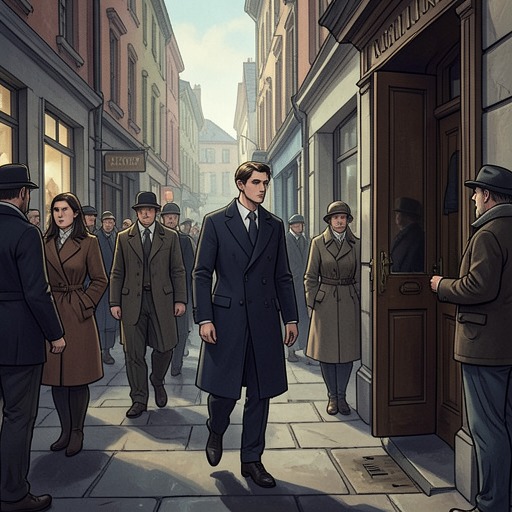
Eugene OneginSpleen is the novel’s name for Eugene Oneguine’s deepening indifference, a condition that outlasts changes of place and consumes the energies of youth. Called “the British spleen / Transported to our Russian clime,” it is not simply a passing mood: it gradually takes possession of his mind, leaves him unmoved by social life and affection, and shadows him even in the country. Its force is measured by what it makes futile—pleasure, success, and the passage of time.
Identity and Description
The narrator introduces the condition as a malady whose cause is now to be investigated, and identifies it as British spleen transplanted to Russia. The label gives Eugene’s distress a cultural as well as personal dimension: an imported fashionable condition has taken root in a different climate. Yet the poem does not treat it as an elegant pose that he can put on and discard. It “gradually possessed his mind,” making the condition an encroaching state rather than a momentary performance.
Spleen is expressed most clearly as a loss of response. Eugene has no design to kill himself, but that distinction does not restore his attachment to life: he has become indifferent to everything. At the festival, he is compared to Childe Harold, the gloomily detached figure through whom the poem makes his alienation legible. Games, worldly affairs, tender looks, and amorous sighs all fail to impress him. The accumulation matters: his numbness is not confined to one disappointment or one kind of experience, but appears to flatten public amusement and intimate feeling alike.
From the City to the Country
The condition is not cured by leaving fashionable settings behind. In the countryside, the ordinary signs of urban diversion—palaces, streets, cards, balls, gatherings, poetry, and fêtes—may be absent, but ennui remains. The poem makes this an explicit reversal of expectation: boredom is not the product of an overfull social calendar, and removing its usual entertainments does not remove the inner state that has made them unsatisfying.
Spleen is pictured as keeping watch over Eugene and following him like a shadow; the image is then revised into the more intimate comparison of a faithful wife. The shift turns an abstract malady into a constant companion. Place changes, but the attachment persists: rural quiet cannot give him relief because the source of his disengagement travels with him. The domestic simile also lends the condition an ironic permanence, as though the one relationship he cannot escape is with his own weariness.
Desire, Success, and Lost Time
The poem connects Eugene’s spleen with the exhaustion of desire. Looking back on his early years, the narrator describes him as once deluded by pleasures that no longer inspire him. He is at once “satiated with success” and worn down by wanting: achievement has not answered his inward complaint, and the world’s noise offers no lasting counterweight to it. Laughter can cover the weariness, but it cannot silence it; the contrast makes social ease a surface over continuing dissatisfaction.
The consequence is given a precise duration and a stark image. Eugene spends eight years in this condition, and those years destroy the blossom of his prime. Spleen therefore measures more than his reaction to a festival or his comfort in the country: it marks a sustained depletion of his youthful life. The movement from early appetite, through exhausted desire and success, to years lost gives the malady a temporal arc, even though the evidence does not describe a cure.
Narrative and Thematic Significance
The novel uses spleen to connect settings and episodes that might otherwise seem separate. The indifferent young man at a festival and the bored landowner in the country are manifestations of the same persistent condition. The movement from urban amusements to rural stillness tests the possibility that a change of surroundings can restore feeling—and finds that it cannot. The shadow image gives this continuity a shape, while the faithful-wife comparison adds a note of irony to its persistence.
The distinction between refusing suicide and being indifferent to everything prevents Eugene’s state from being reduced to a single dramatic impulse. Its defining feature is not an announced intention to die but a broad failure of worldly and emotional stimuli to reach him. By linking that failure to exhausted desire, apparent success, concealed weariness, and eight years of lost prime, the poem presents spleen as a condition that quietly consumes time. Its decisive significance lies in this persistence: the world changes around Eugene, but the inward indifference remains his constant companion.